
Manual of Section, authored by Paul Lewis, Marc Tsurumaki, and David J. Lewis, presents an essential guide to architectural section,
exploring its historical context and modern applications within design practices.
Historical Context of Architectural Sections
Architectural sections, while seemingly modern in focused study, boast a rich lineage tracing back to the origins of architectural representation. Early examples, often conceptual like those by Étienne-Louis Boullée, prioritized conveying spatial ideas and monumental effects over strict constructional accuracy.
Throughout the 20th century, the rise of Modernism saw sections utilized to demonstrate functional clarity and structural logic, exemplified in the work of Frank Lloyd Wright and Le Corbusier. The Manual of Section acknowledges this evolution, positioning the contemporary resurgence of sectional analysis not as a novelty, but as a return to a fundamental mode of architectural thinking.
The book highlights how sections have always been crucial for understanding spatial continuity and the interplay of interior spaces, a tradition it seeks to reinvigorate.
The Authors: Paul Lewis, Marc Tsurumaki, and David J. Lewis
Paul Lewis, Marc Tsurumaki, and David J. Lewis are award-winning architects and educators whose collaborative practice, Lewis.Tsurumaki.Lewis, is renowned for its innovative design approach. Their work consistently emphasizes spatial organization and the exploration of architectural form beyond conventional boundaries.
The authors bring a unique blend of academic rigor and practical experience to Manual of Section. Aaron Betsky, of Architect Magazine, praises the book, reflecting the authors’ deep understanding and passion for the subject.
Their combined expertise allows them to present a comprehensive and insightful guide, making the book an invaluable resource for students and professionals alike, fostering a renewed appreciation for sectional thinking.
Purpose and Scope of the Manual
Manual of Section serves as a comprehensive guide to understanding and utilizing architectural sections as a primary design tool. The book aims to elevate the importance of section, alongside plan and elevation, in the architectural design process. It’s intended for both students and practicing architects seeking to deepen their understanding of spatial composition.
The scope extends from historical precedents, including the conceptual sections of Étienne-Louis Boullée, to contemporary examples like Casa da Música and projects by Diller Scofidio + Renfro.
It explores various sectional types – extruded, holed, inclined, and hybrid – offering principles and practical applications for creating compelling architectural spaces.

Understanding Architectural Sections
Manual of Section clarifies that sections are not merely technical drawings, but powerful instruments for envisioning and shaping architectural space and spatial continuity.
Definition of an Architectural Section
Manual of Section meticulously defines an architectural section as a vital representational technique, extending beyond a simple cut through a building. It’s presented as a hybrid drawing, blending orthographic projection with the potential for conceptual exploration.
The book emphasizes that sections reveal interior spatial qualities often obscured in plans or elevations, offering a unique perspective on a building’s organization and experience. It’s a tool to dissect and understand the relationships between spaces, materials, and structure.
Furthermore, the Manual highlights how sections can be manipulated to emphasize specific design intentions, becoming a deliberate act of representation rather than a purely descriptive one. This allows architects to communicate complex ideas and spatial arrangements effectively.

Section as a Design Tool
Manual of Section powerfully positions the architectural section not merely as a documentation method, but as a fundamental design tool. The authors demonstrate how sections can proactively generate architectural form, influencing spatial arrangements and programmatic relationships from the earliest stages of design development.
The book illustrates how exploring sectional possibilities allows architects to test spatial continuity, verticality, and the intersection of spaces before committing to a final design. It’s a method for thinking through a building’s experience, considering movement, light, and the interplay of different elements.
Through numerous examples, the Manual reveals how sectioning can unlock innovative design solutions and challenge conventional approaches to architectural space.
Section vs. Plan and Elevation
Manual of Section meticulously differentiates the architectural section from the more commonly utilized plan and elevation. While plans define horizontal organization and elevations present the facade, sections reveal the experience of moving through a building – its spatial depth and volumetric qualities.
The authors highlight that sections expose the hidden relationships between floors, the impact of structural elements, and the qualities of light and space that are often obscured in plan or elevation.
This book argues that a robust sectional understanding is crucial for creating compelling architectural experiences, offering a more complete and nuanced representation of a building’s design than traditional drawings alone.

Key Concepts in Sectional Design
Manual of Section delves into vital concepts like spatial continuity, verticality, and the intersection of spaces, demonstrating how sections shape architectural experiences.
Spatial Continuity in Section
Manual of Section emphasizes that a compelling section reveals spatial continuity, moving beyond a simple cut through a building to demonstrate how spaces connect and flow. The book illustrates how architects utilize sections to articulate movement, establish relationships between levels, and define the experience of traversing a building.
It highlights how sections can depict not just the physical presence of space, but also its qualities – light, texture, and atmosphere – as they unfold sequentially. Through examples, the authors showcase how careful sectional design can create a sense of progression and discovery, guiding the user through a deliberate spatial narrative. This continuity isn’t merely about connecting rooms; it’s about crafting a cohesive and meaningful architectural journey.
The Role of Verticality and Height
Manual of Section dedicates significant attention to the impact of verticality and height within architectural design, demonstrating how sections uniquely reveal these qualities. The book argues that sections are crucial for understanding the experiential dimension of height, showcasing how it influences perception and spatial organization.
It explores how architects manipulate vertical space to create dramatic effects, establish hierarchies, and define programmatic relationships. Examples illustrate the use of double-height spaces, atriums, and vertical circulation elements to enhance spatial complexity and create memorable architectural moments. The manual emphasizes that a well-considered section can effectively communicate the building’s vertical ambitions and their impact on the user experience.
Intersection of Spaces in Section
Manual of Section highlights the power of sectional drawings to reveal the intricate intersections of spaces within a building. Unlike plans, sections expose how different volumes overlap, connect, and interact vertically, offering a unique perspective on spatial relationships. The book demonstrates how architects utilize these intersections to create dynamic and complex spatial experiences.
It showcases examples where overlapping spaces generate unexpected views, establish visual connections, and define circulation patterns. The manual emphasizes that understanding these intersections is crucial for designing buildings that are both functional and spatially engaging, allowing for a richer understanding of architectural composition.
Double-Height Spaces and Their Representation
Manual of Section dedicates significant attention to the depiction of double-height spaces, recognizing their impact on spatial experience and architectural expression. The book illustrates how sections effectively communicate the scale and volume of these spaces, revealing their relationship to surrounding areas. It explores various techniques for representing double-height volumes, including the use of cut lines and material indications.
The authors demonstrate how these spaces can create dramatic visual connections, enhance natural light penetration, and foster a sense of grandeur. Manual of Section emphasizes the importance of accurately conveying the vertical dimension in sectional drawings to fully capture the spatial qualities of double-height areas.

Types of Sections Explored in the Manual
Manual of Section thoroughly examines extruded, holed, inclined, and hybrid sections, showcasing diverse approaches to representing spatial complexity and dynamic architectural arrangements;
Extruded Section: Principles and Examples
Extruded sections, as detailed in Manual of Section, represent a fundamental approach, deriving form by extending a two-dimensional shape linearly through space. This method clarifies building organization and spatial relationships, revealing the core volumetric logic of a design.

The manual illustrates how this technique effectively communicates the building’s primary structure and circulation paths. Examples demonstrate how architects utilize extrusion to create distinct spatial zones and define the building’s overall form.
Furthermore, the book highlights how variations in the extruded form—such as tapering, twisting, or segmenting—can introduce complexity and dynamism. Analyzing case studies, the manual showcases how extrusion isn’t merely a simple operation but a powerful tool for shaping architectural space and experience.
Holed Section: Creating Spatial Complexity
Holed sections, explored within Manual of Section, introduce a compelling method for generating spatial complexity by subtracting volume from a primary mass. This technique, as the book explains, allows for the creation of voids, courtyards, and interconnected spaces that challenge traditional notions of enclosure.
The manual demonstrates how strategically placed holes can dramatically alter the flow of light and air, creating dynamic interior environments. Examples showcase how architects employ this strategy to establish visual connections between different levels and zones within a building.
Furthermore, the book emphasizes that the careful consideration of hole placement and shape is crucial for achieving a cohesive and meaningful design. Analyzing projects, it reveals how holed sections can be used to create a sense of depth, mystery, and spatial richness.
Inclined Section: Dynamic Spatial Arrangements
Manual of Section delves into inclined sections as a powerful tool for disrupting conventional spatial arrangements and introducing dynamic movement within architectural designs. Unlike traditional orthogonal sections, inclined cuts reveal a building’s interior through a skewed perspective, emphasizing diagonal relationships and spatial flow.
The book illustrates how this technique can highlight the interplay between floors, walls, and ceilings, creating a sense of visual excitement and spatial ambiguity. Examples demonstrate how inclined sections can be used to emphasize the building’s form and its relationship to the surrounding context.
The authors showcase how architects utilize inclined surfaces to create unique programmatic connections and challenge the user’s perception of space, fostering a more engaging and experiential environment.
Hybrid Sections: Combining Different Approaches
Manual of Section explores hybrid sections, demonstrating how architects often move beyond singular sectional strategies to create more complex and nuanced representations. These sections skillfully blend elements of extruded, holed, and inclined techniques, resulting in drawings that reveal multiple spatial conditions simultaneously.
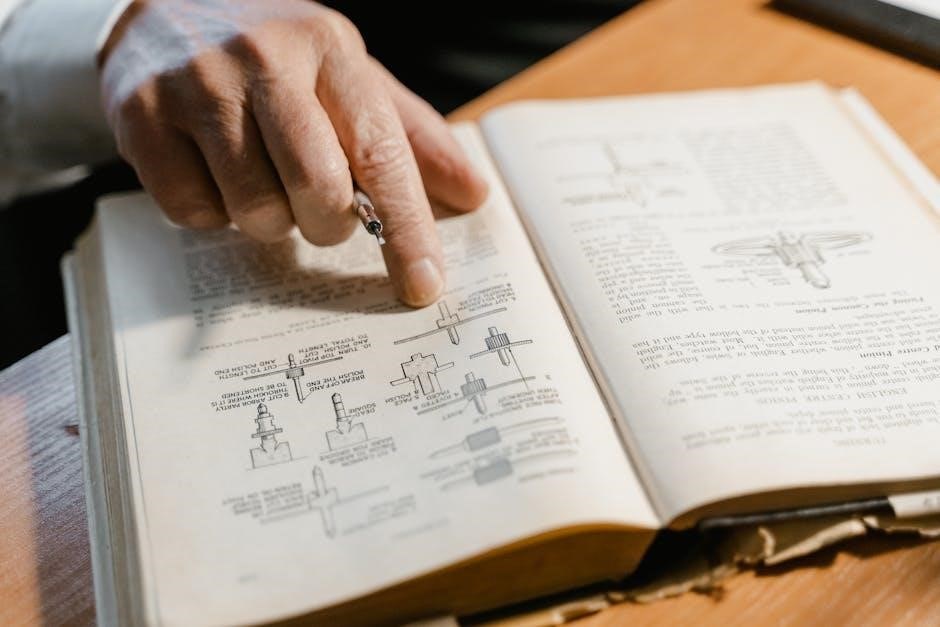
The book highlights how combining these approaches allows for a richer understanding of a building’s internal organization and programmatic relationships. By layering different sectional perspectives, architects can communicate intricate spatial sequences and the interplay of various building components.
These hybrid approaches offer a more comprehensive and dynamic representation of architectural space, moving beyond simple cut-throughs to reveal the building’s multifaceted character.

Case Studies and Examples
Manual of Section analyzes projects like Casa da Música, Frank Lloyd Wright’s designs, and works by Diller Scofidio + Renfro, alongside Boullée’s conceptual sections.
Analysis of Casa da Música (Porto, Portugal)
Casa da Música, designed by Rem Koolhaas and OMA, serves as a compelling case study within Manual of Section, demonstrating complex spatial arrangements. The book meticulously examines how Koolhaas utilized sectional strategies to integrate performance spaces with public circulation.
The analysis highlights the building’s dynamic inclined surfaces and the interplay between interior spaces, showcasing how section reveals the building’s programmatic organization. Manual of Section illustrates how the building’s form is not merely an aesthetic choice, but a direct response to acoustic requirements and the desire to create a porous, accessible cultural center.
Through detailed sectional drawings, the manual unpacks the building’s layered composition, revealing the intricate relationship between the concrete structure and the fluid, organic forms. This case study exemplifies the power of section as a tool for understanding and communicating architectural intent.
Examination of Frank Lloyd Wright’s Designs
Manual of Section delves into Frank Lloyd Wright’s designs, notably his exploration of horizontal shear and the integration of structure with spatial experience. The book analyzes how Wright employed sectional devices to create a sense of continuous flow within his Prairie Style homes, like Fallingwater.
The analysis emphasizes Wright’s masterful manipulation of height and the interplay between interior and exterior spaces, revealed through precise sectional representations. Manual of Section demonstrates how Wright’s designs often prioritize a sectional logic, where the experience of moving through a space is paramount.
The manual highlights how Wright’s detailing in section contributes to the overall architectural effect, showcasing his commitment to craftsmanship and material honesty. This examination underscores the enduring relevance of Wright’s work for contemporary sectional design.
Diller Scofidio + Renfro Projects in Section
Manual of Section examines projects by Diller Scofidio + Renfro, showcasing their innovative approach to spatial complexity and programmatic layering. The book analyzes how DS+R utilizes section to create dynamic and often unconventional architectural experiences, particularly in cultural institutions.
The analysis highlights their skillful deployment of inclined surfaces and “holed” sections, generating unexpected perspectives and blurring the boundaries between public and private realms. Manual of Section demonstrates how DS+R’s designs often challenge traditional sectional conventions, prioritizing performative space and visitor circulation.
The manual illustrates how their detailing in section contributes to the overall conceptual clarity, revealing a commitment to precision and a unique architectural vision.
Étienne-Louis Boullée’s Conceptual Sections
Manual of Section delves into the visionary, yet unrealized, projects of Étienne-Louis Boullée, emphasizing his radical approach to architectural representation. The book explores how Boullée employed sectional drawings not as documentation of built form, but as tools for expressing monumental scale and abstract ideas.
These conceptual sections, often depicting vast, geometrically pure spaces, demonstrate a preoccupation with light, shadow, and the sublime. Manual of Section highlights Boullée’s influence on subsequent generations of architects, showcasing his ability to evoke powerful emotional responses through purely diagrammatic means.
The manual illustrates how his work transcends practical considerations, focusing instead on the conceptual potential of architectural form and its impact on the human psyche.

Technical Aspects of Sectional Drawings
Manual of Section details representing materials, structural elements, and horizontal shear in sectional drawings, emphasizing clarity and precision for effective architectural communication.
Representing Materials in Section
Manual of Section meticulously addresses the challenge of conveying material qualities within the two-dimensional realm of a sectional drawing. The book emphasizes that effective representation goes beyond simply outlining shapes; it requires a nuanced understanding of how different materials read graphically.
Lewis, Tsurumaki, and Lewis advocate for a consistent and deliberate approach to material notation, suggesting strategies for differentiating between concrete, wood, glass, and other common building components. They highlight the importance of considering texture, density, and reflectivity when choosing appropriate hatching patterns and tonal values.
The manual encourages architects to move beyond conventional conventions and explore innovative ways to communicate material properties, ultimately enhancing the clarity and richness of their sectional representations. This detailed approach ensures that the section accurately reflects the intended tactile and visual experience of the building.
Depicting Structural Elements
Manual of Section dedicates significant attention to the accurate and informative depiction of structural elements within sectional drawings. The authors stress that sections are not merely spatial explorations, but also crucial tools for communicating a building’s underlying logic and stability.
Lewis, Tsurumaki, and Lewis advocate for clearly illustrating load paths, connections, and the interplay between various structural components – columns, beams, walls, and foundations. They emphasize the importance of representing the thickness and depth of these elements proportionally, providing a realistic sense of their scale and contribution to the overall structure.
The book encourages a thoughtful approach to line weights and hatching, differentiating between primary and secondary structural members to enhance readability and comprehension. This detailed representation aids in understanding the building’s structural integrity.
Horizontal Shear and Structural Integrity
Manual of Section highlights the critical role of representing horizontal shear forces in sectional drawings to demonstrate a building’s structural integrity. The authors emphasize that sections must convey how a structure resists lateral loads, such as wind or seismic activity, not just gravity.
Lewis, Tsurumaki, and Lewis advocate for visually communicating the transfer of shear forces through diaphragms, shear walls, and connections. They suggest using diagrams and annotations to clarify these often-complex systems, ensuring that the section isn’t simply a spatial cut, but a performance illustration.
The book stresses the importance of detailing connections and anchorage points, revealing how elements work together to maintain stability under stress, ultimately showcasing a building’s resilience.
Detailing in Sectional Drawings
Manual of Section underscores that effective sectional drawings demand meticulous detailing to convey architectural intent and construction feasibility. The authors, Lewis, Tsurumaki, and Lewis, advocate for representing material thicknesses, layering, and connections with precision, moving beyond simplified representations.
The book emphasizes the importance of showing how different building components interface – wall-to-floor, roof-to-wall, and window-to-wall junctions – to clarify construction assemblies. It encourages the use of conventions and annotations to explain complex details, ensuring clarity for both designers and builders.
Detailing in section, as presented in the manual, isn’t merely about aesthetics; it’s about communicating the building’s physical reality and performance.
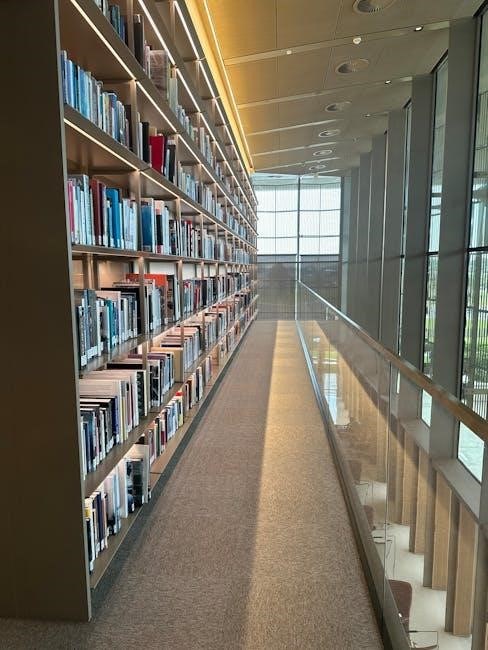
The Future of Sectional Design
Manual of Section suggests digital tools will increasingly enhance sectional representation, yet the core principles of spatial understanding and design remain vitally relevant.
Emerging Trends in Architectural Sections
Manual of Section implicitly points towards several evolving trends in architectural sectional design. Contemporary practice increasingly utilizes sections not merely as descriptive tools, but as proactive generators of form and spatial experience. This involves a move beyond simple orthogonal cuts, embracing inclined and hybrid sectional strategies to dynamically arrange interior spaces.
Furthermore, there’s a growing interest in representing complexity – the interplay of structure, materiality, and program – with greater nuance within sectional drawings. The book’s case studies, like Casa da Música, demonstrate this pursuit. Digital modeling allows for intricate sectional explorations, pushing the boundaries of what can be visualized and constructed.
Ultimately, the future sees sections becoming more integral to the initial conceptual phases of design, influencing the overall architectural vision, rather than simply documenting a finalized form.
Digital Tools for Sectional Representation
Manual of Section, while focused on the fundamental principles of sectional design, indirectly highlights the transformative impact of digital tools. Traditionally, sectional drawings relied on manual drafting techniques, limiting complexity and iterative exploration. Now, Building Information Modeling (BIM) software allows architects to create precise, parametric sections linked directly to 3D models.
This integration facilitates rapid prototyping and analysis of spatial relationships, structural systems, and material properties. Rendering engines enable realistic visualizations of light, shadow, and texture within sections, enhancing communication and design evaluation.
Furthermore, digital platforms support collaborative workflows, enabling seamless sharing and modification of sectional drawings among design teams. These tools empower architects to explore increasingly sophisticated sectional concepts, as evidenced by the complex projects analyzed within the book.
The Continued Relevance of the Manual of Section
Manual of Section maintains crucial relevance in contemporary architectural education and practice despite advancements in digital design tools. The book’s emphasis on fundamental principles – spatial continuity, verticality, and the intersection of spaces – transcends specific software or technological trends. It provides a conceptual framework for thinking about architecture beyond plan and elevation.
As Aaron Betsky notes, it’s a book to be “devoured” by those who appreciate a well-crafted section. The manual encourages a deliberate and thoughtful approach to design, fostering a deeper understanding of architectural space.
Its enduring value lies in its ability to cultivate critical thinking and spatial reasoning skills, essential for architects navigating an increasingly complex design landscape.
Related Posts
graco snugride 35 lite elite manual
The Graco Snugride 35 Lite Elite manual provides essential information…


sharp el-1197piii manual
The Sharp EL-1197PIII is a high-performance electronic printing calculator designed…