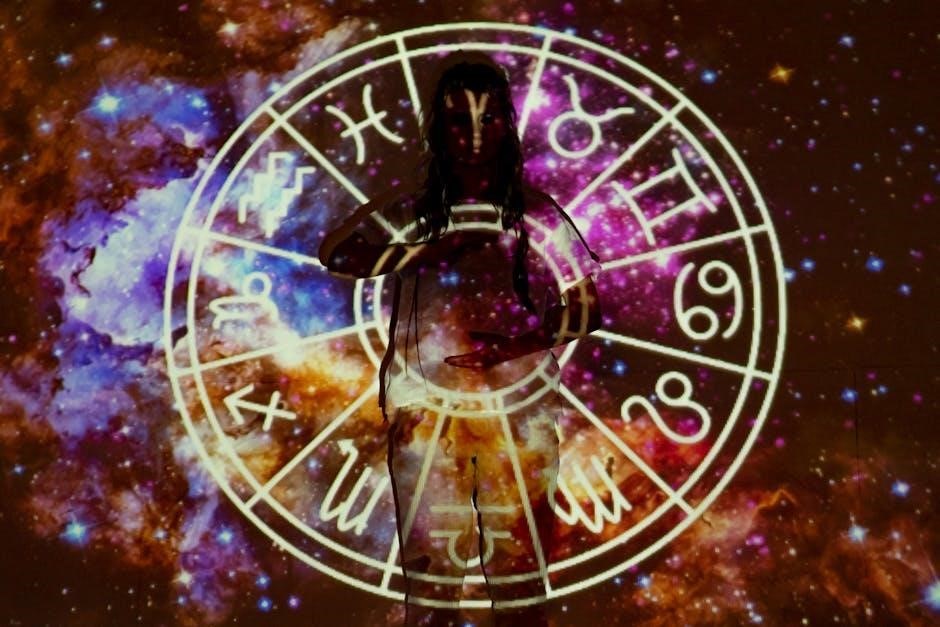
Frida Kahlo’s Astrology Chart Analysis: A Deep Dive
Frida Kahlo’s chart, utilizing whole-sign houses, reveals a complex interplay of energies reflecting her life’s passions, pain, and artistic vision. This analysis delves into
her astrological blueprint, exploring key placements and aspects that shaped her unique destiny and creative expression.
Her Sun-Neptune cazimi in Cancer, alongside a Leo rising, paints a picture of an individual deeply connected to emotions, fantasy, and a powerful sense of self.
Frida Kahlo, a monumental figure in 20th-century art, transcends the label of mere painter; she was a revolutionary activist, a style icon, and a woman who bravely confronted chronic pain and disability throughout her life. Understanding her through the lens of astrology offers a profound insight into the forces that shaped her extraordinary journey.
This exploration utilizes a whole-sign house system, a method gaining prominence for its clarity and focus on sign-based energies. Kahlo’s birth chart isn’t simply a map of celestial positions, but a symbolic representation of her inner world – her passions, struggles, and the unique way she perceived and expressed reality.
Her art, often intensely personal and autobiographical, becomes even more resonant when viewed alongside her astrological profile. The chart illuminates the core themes of identity, suffering, creativity, and the blurring of boundaries between dream and reality that permeate her work. We aim to decode the language of the stars to better understand the woman behind the iconic self-portraits.
Frida Kahlo’s Birth Data & Chart Overview
Frida Kahlo was born on July 6, 1907, in Coyoacán, Mexico City, Mexico. While precise birth times are debated, a commonly used time is 6:00 PM, which forms the basis for this chart analysis. Utilizing whole-sign houses, the chart reveals a compelling configuration of planetary energies.
Her Sun resides in Cancer, conjunct Neptune in the 12th house – a pivotal placement we’ll explore in detail. Leo rises, signifying a strong sense of self-expression and a natural inclination towards the dramatic. Mars is positioned in Virgo, indicating a meticulous and practical approach to action, often tempered by self-criticism.
The chart is notably dominated by water elements, emphasizing emotional depth and sensitivity. Several planets fall within the mutable signs, suggesting adaptability but also potential instability. The presence of retrograde planets adds layers of complexity, hinting at internal processing and revisiting past themes. This overview sets the stage for a deeper dive into the nuances of Kahlo’s astrological blueprint.
The Significance of Whole-Sign Houses in Frida’s Chart
Whole-sign houses, unlike Placidus or other systems, assign an entire sign to each house cusp, offering a more streamlined and arguably more accurate representation of planetary influence. In Frida Kahlo’s chart, this method is particularly insightful, emphasizing the sign’s inherent qualities and minimizing cusp complexities.
For instance, her Sun-Neptune conjunction falls entirely within Cancer, amplifying the sign’s themes of home, family, and emotional security. The 12th house, encompassing all of Pisces, becomes a potent realm of the subconscious, secrets, and spiritual connection. Leo, as the first house, defines her outward persona with boldness and creativity.
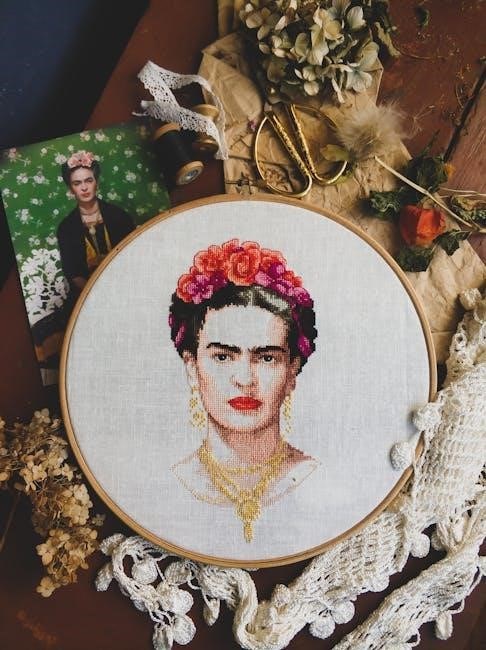
This system allows for a clearer understanding of how planets ‘behave’ within a sign, rather than being split across cusps. It highlights the overarching themes of each house, providing a more holistic interpretation of Kahlo’s life experiences and artistic expression. It’s a method that beautifully aligns with her intensely personal and symbolic work.
Key Planetary Placements & Aspects
Frida Kahlo’s chart is dominated by a powerful Sun-Neptune cazimi in Cancer, alongside a Leo rising, shaping her identity and artistic vision profoundly.
Sun-Neptune Cazimi in Cancer: Core Identity & Reality
Frida Kahlo’s Sun-Neptune cazimi in Cancer is a cornerstone of her astrological profile, profoundly influencing her core identity and perception of reality. A cazimi, a tight conjunction with the Sun, amplifies Neptune’s energy, embedding it deeply within her will and vitality.
This placement suggests a blending of fantasy and reality, a tendency to seek heightened experiences, and a potential struggle to define a concrete sense of self. She wasn’t simply painting dreams, as she herself stated, but rather her intensely felt, subjective reality – a reality colored by Neptunian imagination and sensitivity.
The Cancer sign adds an emotional depth and a strong connection to the subconscious, further blurring the lines between inner experience and external perception. This configuration fostered a higher vision for life, imbuing her work with a devotional quality and a unique, otherworldly perspective. It speaks to a merging with something larger than herself, expressed through her art.
Leo Rising: The Ascendant and its Influence
Frida Kahlo’s Leo rising significantly shapes how she presented herself to the world and the initial impressions she made. The Ascendant, or rising sign, represents the mask we wear, the outward personality, and the first filter through which others perceive us.
Leo is a sign of creativity, self-expression, and a natural desire for recognition. This suggests Frida possessed a magnetic presence, a flair for the dramatic, and a strong sense of individuality. It also indicates a need to be seen and appreciated for her unique qualities, which aligns with her iconic status and bold artistic style.
Crucially, with the Sun ruling Leo, Frida’s chart ruler is emphasized by her rising sign. This reinforces the importance of her core identity (Sun) and amplifies her life force. The Leo rising, combined with the Sun-Neptune cazimi, created a captivating persona – a blend of regal confidence and ethereal sensitivity.
Mars in Virgo: Drive, Work & Physical Challenges
Frida Kahlo’s Mars in Virgo placement offers crucial insight into her relentless drive, meticulous work ethic, and the persistent physical challenges she faced throughout her life. Mars represents action, energy, and how we assert ourselves, while Virgo governs details, health, and service.
This combination suggests Frida channeled her energy into practical pursuits, particularly her art, with a highly critical and perfectionistic approach. She likely possessed immense discipline and a strong desire to refine her craft, constantly analyzing and improving her work. However, Virgo’s association with worry and anxiety could have contributed to her self-doubt.
More significantly, Mars in Virgo often indicates challenges related to physical health and potential for chronic illness. This resonates deeply with Frida’s life, marked by a devastating bus accident and lifelong pain. Her Martian energy was likely focused on managing her body and overcoming physical limitations, fueling her artistic expression as a form of resilience.
Exploring the Houses & Their Inhabitants
Examining Frida Kahlo’s chart through the lens of whole-sign houses reveals how planetary energies manifested in specific life areas, shaping her experiences and destiny.
The 12th House: Secrets, Suffering & the Subconscious
Frida Kahlo’s Sun-Neptune cazimi residing within the 12th whole-sign house is profoundly significant, illuminating the core of her internal world and life experiences. Traditionally, the 12th house governs hidden realms – the subconscious, secrets, isolation, and suffering.
This placement suggests that much of Frida’s identity was interwoven with themes of hidden pain, both physical and emotional. The 12th house often indicates experiences that are beyond conscious control, and for Frida, this manifested as chronic illness and disability. Neptune’s influence here blurred the lines between reality and illusion, potentially contributing to a sense of detachment or spiritual connection.
The cazimi aspect, while intensifying the Sun’s energy, also imbued it with Neptune’s qualities, suggesting a devotional quality to her suffering and a unique ability to transform pain into art. Her statement, “I never painted dreams. I paint my own reality,” speaks to this integration – a raw, honest portrayal of her inner landscape, born from the depths of the 12th house.
The 1st House: Self-Image & Physical Body
Frida Kahlo’s Leo rising places her ascendant ruler, the Sun, in a position of prominence, directly impacting her self-image and physical presentation. The 1st house represents the ‘mask’ we wear, our initial impression, and the physical body itself. With Leo rising, Frida projected an image of strength, creativity, and a regal bearing, despite her considerable physical challenges.
However, the Sun’s cazimi with Neptune in the 12th house complicates this picture. While Leo suggests outward confidence, Neptune introduces a layer of illusion and self-undoing. This could manifest as a disconnect between her perceived self and her actual experience, or a tendency to idealize her own image.
Her physical body, a central theme in her art, was undoubtedly shaped by astrological influences. The 1st house connection suggests a deep identification with her physical form, both its beauty and its limitations. The Sun-Neptune aspect may have contributed to a fluctuating sense of physical vitality and a complex relationship with her own body image.
The 5th House: Creativity, Self-Expression & Romance
Frida Kahlo’s 5th house, governing creativity, self-expression, and romance, is significantly influenced by the placement of her Sun-Neptune conjunction in Cancer. This suggests her artistic drive wasn’t simply a skill, but a deeply felt need to express her inner world and emotional reality. Neptune’s presence imbues her art with a dreamlike quality, blurring the lines between fantasy and lived experience, as she herself acknowledged – rejecting the label of Surrealist.
Her creative process was likely intuitive and emotionally charged, fueled by a desire to transcend ordinary perception. Romance, similarly, was filtered through a Neptunian lens, potentially leading to idealistic expectations or a tendency towards passionate, yet tumultuous relationships.
The Cancerian energy further emphasizes emotional depth and a connection to her roots, informing the intensely personal and often autobiographical nature of her work. Self-expression wasn’t merely performance; it was survival.
Deeper Analysis of Specific Themes
Exploring Frida’s chart reveals how astrological indicators correlate with her chronic pain, complex relationships, and profoundly expressive art, shaped by Neptune’s influence.
Chronic Pain & Illness: Astrological Indicators
Frida Kahlo’s experience with chronic pain and illness is strikingly reflected in her astrological chart. The 12th house, traditionally associated with hidden suffering, secrets, and the subconscious, is powerfully emphasized by her Sun-Neptune cazimi within it.
This placement suggests a deep internalization of pain, a sense of being unseen or misunderstood in her suffering, and a blurring of boundaries between physical and emotional realities. Neptune, ruling illusion and dissolution, can indicate conditions that are difficult to diagnose or have fluctuating symptoms.
Furthermore, Mars in Virgo, a sign associated with meticulousness and a tendency towards worry, may point to a focus on physical ailments and a critical approach to her body. The inherent perfectionism of Virgo, combined with Mars’s energy, could have contributed to self-criticism and exacerbation of physical discomfort.
The chart suggests that Frida’s pain wasn’t merely physical; it was deeply interwoven with her identity, creative process, and spiritual understanding of life, manifesting as a profound and transformative experience.
Relationships & Love Life: Venus & Mars in Frida’s Chart
Frida Kahlo’s Venus sign and the placement of Mars offer insights into her complex romantic life and approach to relationships. While specific Venus placement details aren’t readily available in the provided text, the influence of Neptune on her Sun suggests a tendency to idealize partners and experience relationships through a lens of fantasy.
Her Mars in Virgo indicates a practical, service-oriented approach to love, but also a potential for anxiety and critical assessment within partnerships. This placement might manifest as a desire to “fix” or improve her lovers, alongside a fear of vulnerability.
The intensity of her emotional world, amplified by the Sun-Neptune cazimi, likely created a dynamic where relationships were deeply felt, often tumultuous, and intertwined with her artistic expression. Her passionate nature, coupled with Virgo’s discerning eye, suggests a search for a partner who could both stimulate and ground her.
Ultimately, her chart hints at a love life marked by both profound connection and enduring challenges.
Artistic Expression: Neptune & the Creative Impulse
Neptune’s prominent role in Frida Kahlo’s chart, specifically its cazimi conjunction with the Sun in Cancer, is fundamentally linked to her extraordinary artistic expression. This placement dissolves the boundaries between reality and imagination, fueling a unique vision that wasn’t about painting dreams, but rather, her intensely personal reality.
The integration of Neptune with her core identity allowed Frida to access a deeper, more symbolic level of creativity. This isn’t simply inspiration; it’s a merging with the universal creative source, resulting in art that feels both deeply personal and universally resonant.
Her ability to transform pain, illness, and lived experience into powerful imagery stems from Neptune’s capacity to transmute suffering into beauty. The devotional quality associated with this placement suggests her art wasn’t merely a profession, but a spiritual practice.
Ultimately, Neptune gifted Frida with a heightened sensitivity and the ability to perceive and portray the unseen dimensions of human experience.
Chart Ruler & Dominant Energies
The Sun rules Frida’s chart as Leo is her ascendant, amplifying its influence. Water element dominance underscores emotional depth, while retrograde planets shaped her unique path.
The Sun as Chart Ruler: Vitality & Self-Will
As the chart ruler, the Sun’s position is paramount in understanding Frida Kahlo’s core essence. Ruling Leo, her ascendant sign, it bestows significant emphasis on her identity and life force. This placement suggests a strong will to express herself authentically, a need for recognition, and a natural inclination towards leadership – though often expressed through her art rather than conventional means.
The Sun’s cazimi with Neptune in Cancer further complicates this picture, infusing her vitality with a dreamlike quality. While the Sun provides the drive, Neptune softens the edges, blurring the lines between reality and fantasy. This suggests a profound connection to her inner world and a tendency to project her emotions onto her creative work.
Her artistic expression wasn’t merely a skill, but a fundamental need to externalize her internal landscape. The Sun’s rulership highlights how central self-expression was to her very being, fueling her resilience despite immense physical and emotional challenges. It’s a testament to her unwavering self-will, even when her reality felt fragmented.
Water Element Dominance: Emotional Depth & Sensitivity
Frida Kahlo’s chart exhibits a pronounced dominance of the Water element, profoundly shaping her emotional landscape and artistic expression. Cancer, where her Sun and Neptune reside, and Scorpio, potentially influencing her subconscious depths, amplify this watery influence. This suggests an intensely feeling nature, a deep capacity for empathy, and a strong connection to the unseen realms.
Water signs are known for their intuition and sensitivity, qualities undoubtedly present in Kahlo’s work. Her paintings weren’t simply representations of her physical pain, but visceral explorations of her emotional and psychological states. The Water element explains her ability to tap into universal themes of suffering, love, and loss with such raw honesty.
However, Water’s fluidity can also manifest as emotional volatility and a tendency towards self-sacrifice. This element’s strength in her chart likely contributed to her struggles with identity and her inclination to merge with others, as suggested by the Neptune-Sun conjunction.
The Role of Retrograde Planets in Frida’s Experience
Frida Kahlo’s birth chart likely contains retrograde planets, adding layers of complexity to her life’s journey. While specific retrograde placements require a full chart calculation, their general influence is significant. Retrograde motion often indicates an internalizing of planetary energies, leading to a unique and often challenging expression of those themes.
Retrograde planets can signify delays, revisions, and a sense of fate or karma at play. For Kahlo, this could have manifested as recurring health issues, a revisiting of emotional wounds, or a need to redefine her artistic path repeatedly. The internal focus encouraged by retrograde motion may have fueled her intensely personal and introspective art.
Furthermore, retrograde planets often prompt individuals to work through challenges related to the planet’s archetype, rather than experiencing them in a straightforward manner. This internal struggle likely contributed to the depth and authenticity of her artistic voice.
Understanding Frida Through Astrology
Astrological analysis of Frida Kahlo’s birth chart offers a compelling framework for understanding the complexities of her life and art. The Sun-Neptune cazimi in Cancer, coupled with her Leo rising, illuminates her deeply emotional nature, vivid imagination, and powerful self-expression. Her chart reveals a soul grappling with themes of identity, reality, and suffering, all channeled into her iconic artwork.
The prominence of water element energies underscores her sensitivity and intuitive abilities, while potential retrograde planets suggest a life marked by internal revisions and karmic lessons. Ultimately, astrology doesn’t define Frida Kahlo, but rather provides a nuanced lens through which to appreciate the forces that shaped her extraordinary journey.
By examining her chart, we gain a deeper appreciation for the artist’s resilience, her unwavering commitment to authenticity, and the profound emotional depth that permeates her work.
Related Posts
massachusetts residential lease agreement pdf
A Massachusetts residential lease agreement pdf is available online, providing…

7 habits of most effective persons pdf
The 7 Habits of Highly Effective People by Stephen R.…